The star of the suitcase
The cheese: buy the wedge, say four words.
Zamorano DOP — a firm sheep's-milk cheese and Gold winner at the World Cheese Awards 2021 — is the single best thing you can put in your suitcase. In American gourmet shops it sells for $13.50 to $27 per 250 g. Here, a generous wedge costs little, because this is everyday food, not an imported luxury.
The four words that matter: "envasado al vacío" — vacuum-packed. Ask at any food shop or market stall in the old town and they will seal your wedge so it travels safely for days. Buy it on your last morning, pack it in the middle of your bag, and it will outlast the flight home without complaint.
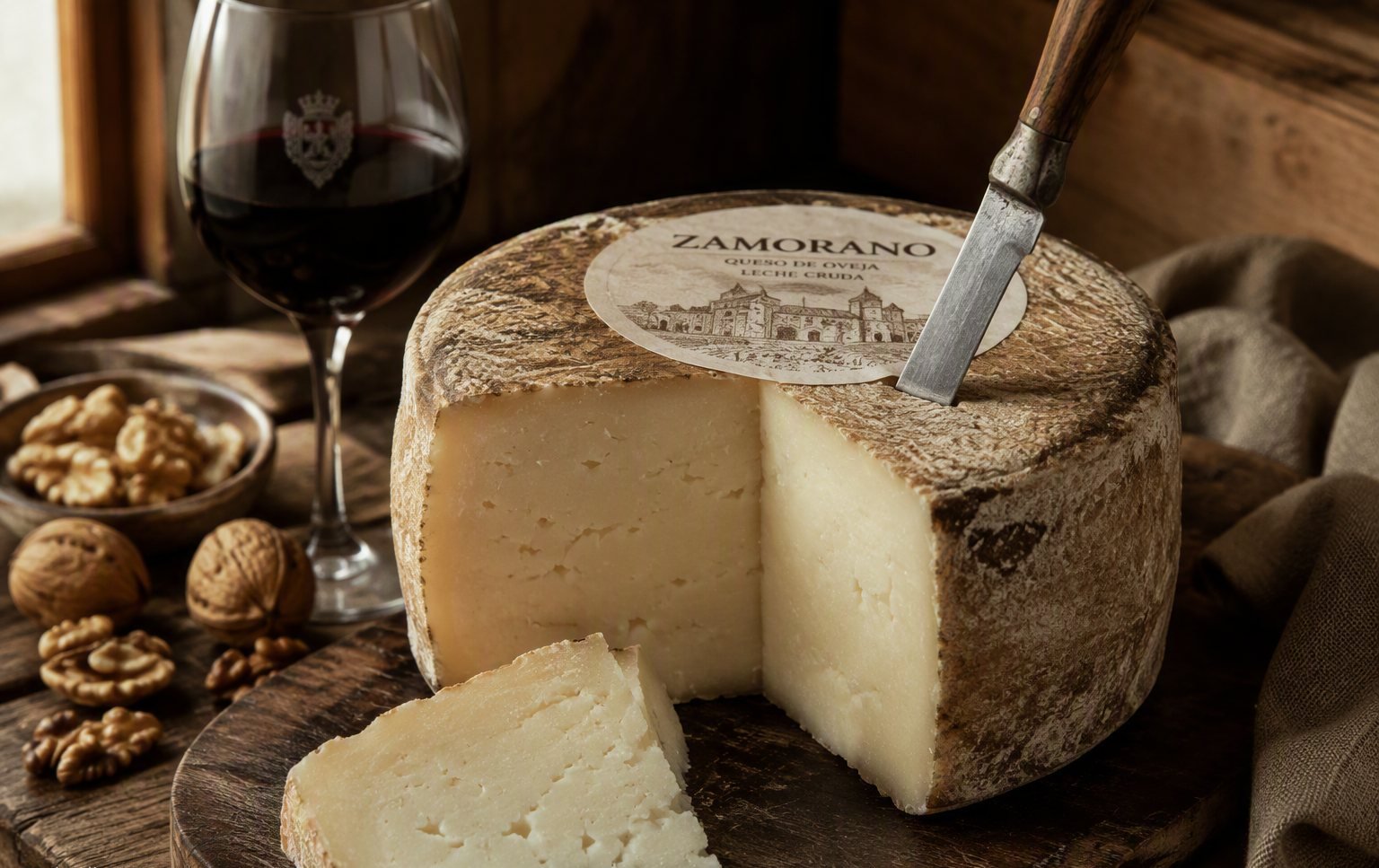
Gold at the World Cheese Awards 2021 — and an everyday tapa here.
The wine: from €8 to 100 Parker points.
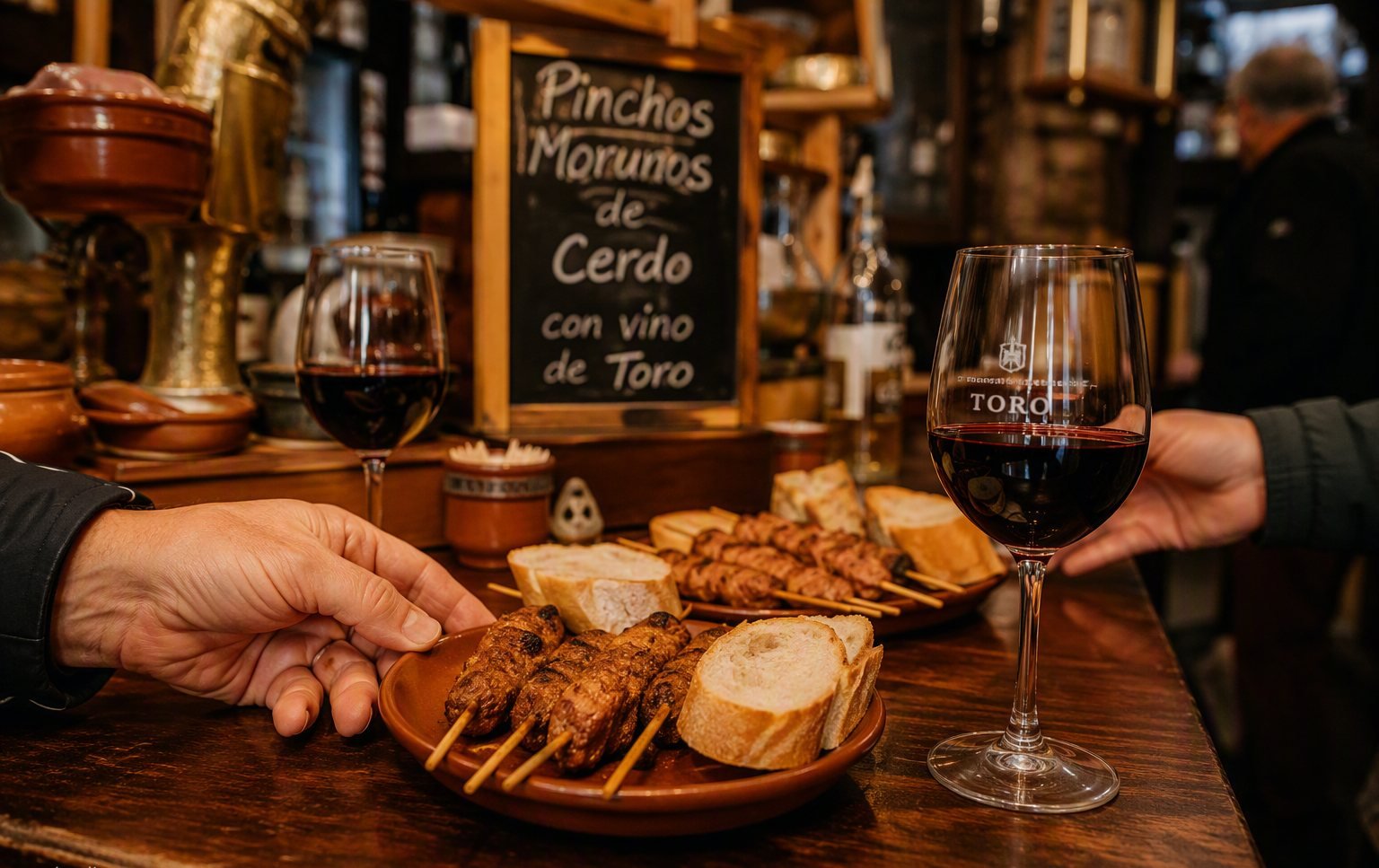
Zamora's wine is Toro, and it makes two very different souvenirs. The generous one: a bottle of Toro crianza from around €8 — dark, honest red that will embarrass most bottles at twice the price back home. Buy one for the friend who watered the plants.
The serious one: Termanthia, the Toro wine that scored 100 Parker points (2004 vintage). The house behind it, Numanthia, is now owned by LVMH — which tells you exactly how the wine world rates this region. A bottle of the prestige end of Toro, bought at source, is the gift for the person who already has everything. If you have time, visit a winery in Toro itself, 30 minutes away, and carry the bottle home with the story attached.
The pantry and the sweet box
Zamora is a province that eats well and preserves well. The food shops of the old town are stocked with the things Spanish families actually put in their own cupboards: local honey, tinned and jarred preserves, cured meats, and the traditional sweets that appear in bakery windows around the holidays. None of it is packaged for tourists, which is precisely the point — you are buying what a zamorano grandmother would buy, at zamorano prices. Ask the shopkeeper what keeps best for travel; they will know, and they will enjoy being asked.
The crafts: small, local, made by hand.
Keep an eye out for the craft stalls and small markets that appear in the old town's squares: ceramics in the deep Castilian palette, leather goods, and handwork from the province's villages. These are the souvenirs that survive the years — a bowl you use every morning beats a snow globe every time. Nothing here is mass-produced for a cruise-ship crowd, because Zamora doesn't have one.
What not to bother with
The generic souvenir — the magnet, the keyring, the "Spain" tea towel made nowhere near Spain — exists here in small quantities, and you may safely ignore it. This is not a city that lives off trinkets, and the trinkets it has are the same ones you'd find in Madrid, Toledo or anywhere else on the circuit. You came to Zamora because you're a traveller, not a tourist. Your suitcase should prove it: cheese, wine, something handmade. Everything else is luggage space you could spend on a second wedge.
Getting it home: cheese & wine logistics
| Cheese | ask for "envasado al vacío" (vacuum-packed); travels for days without refrigeration |
| Wine | must go in your checked bag — never carry-on; wrap bottles in clothing in the centre of the case |
| Buying wine | Toro crianza from ~€8 in local shops; winery-direct in Toro, 30 min away |
| Your allowance | rules for cheese and alcohol differ by country — check your own country's current rules (EU / UK / US) before you fly |
| When to buy | cheese on your last morning; wine any day |