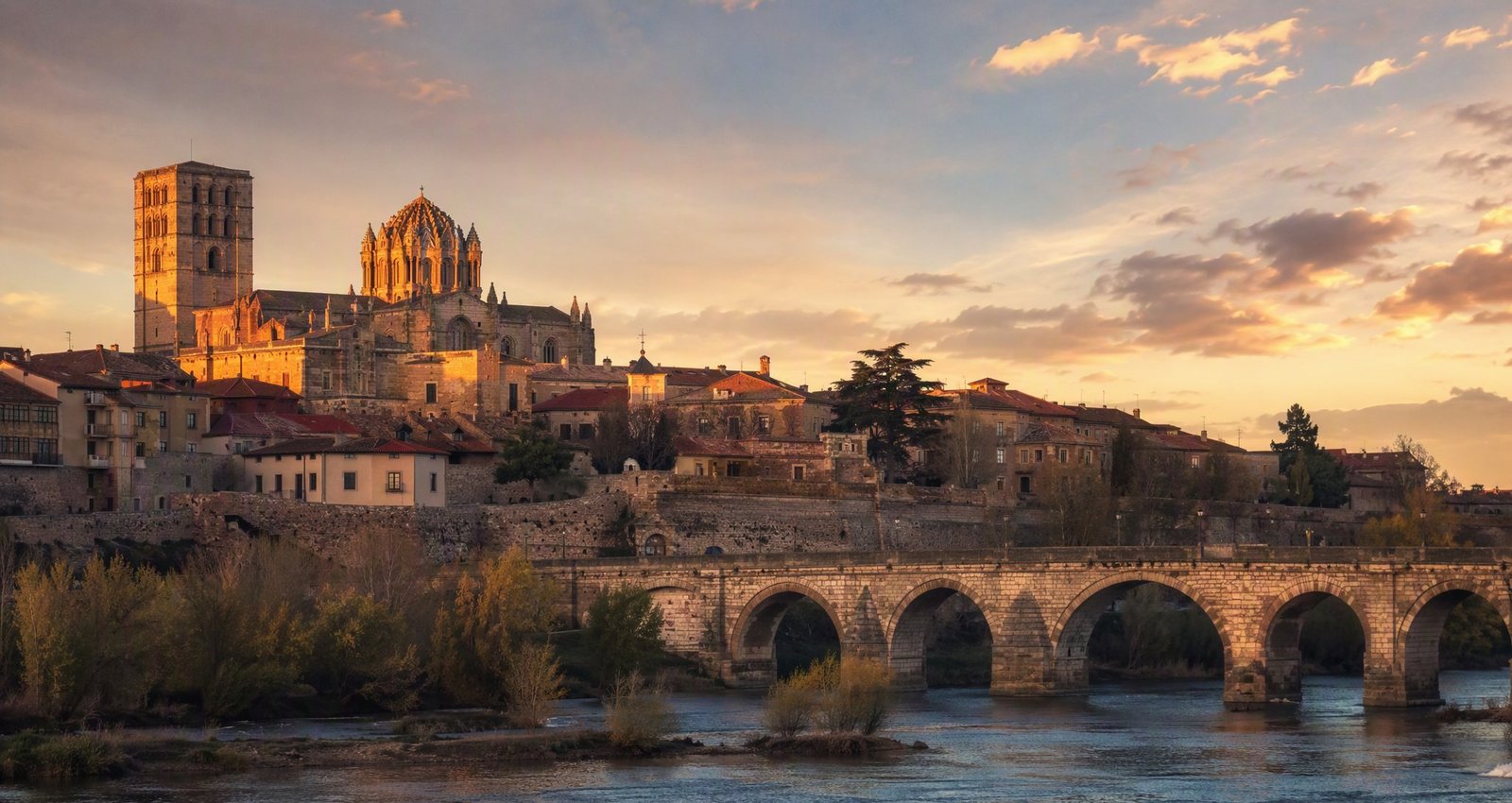
Let's start with the thing you're actually wondering. Is it safe? Yes. Zamora is a small, lived-in Castilian city where the evening streets belong to families and retirees taking the paseo, not to anyone you need to worry about. And will it exhaust me? No. The old town is compact enough that everything worth seeing sits within about twenty minutes on foot — with benches, cafés and quiet church interiors spaced exactly where a sensible person wants to sit down.
A city built for your rhythm
Zamora doesn't do rushing. Lunch is long, the afternoon is for resting, and the evening paseo is a stroll, not a march. You'll fit in immediately. The distances help: from the cathedral to the castle is a gentle few minutes; from your hotel to a café table with a view, fewer. Cobbles exist — this is a medieval city — so bring the comfortable shoes, but there are no climbs to conquer and no metro system to decode. When your feet have had enough, a coffee and a slice of something local costs little and buys you an hour of people-watching nobody will hurry you out of.
Two mornings at your own pace
Two visits reward the unhurried traveller above all others. The Ethnographic Museum of Castilla y León is the surprise favourite of nearly everyone who goes in: the material memory of this region — how people lived, worked, dressed and cooked — displayed with real care, and uncrowded enough to read every label. Then the Romanesque Mile: 12 medieval churches on a single €6 joint ticket, part of an old town holding 24 in total, the densest concentration in Europe. There is no group to keep up with. Take one church an hour. Sit in the cool stone quiet. That's not dawdling; that's doing it properly.
Holy Week, if you want the deep version
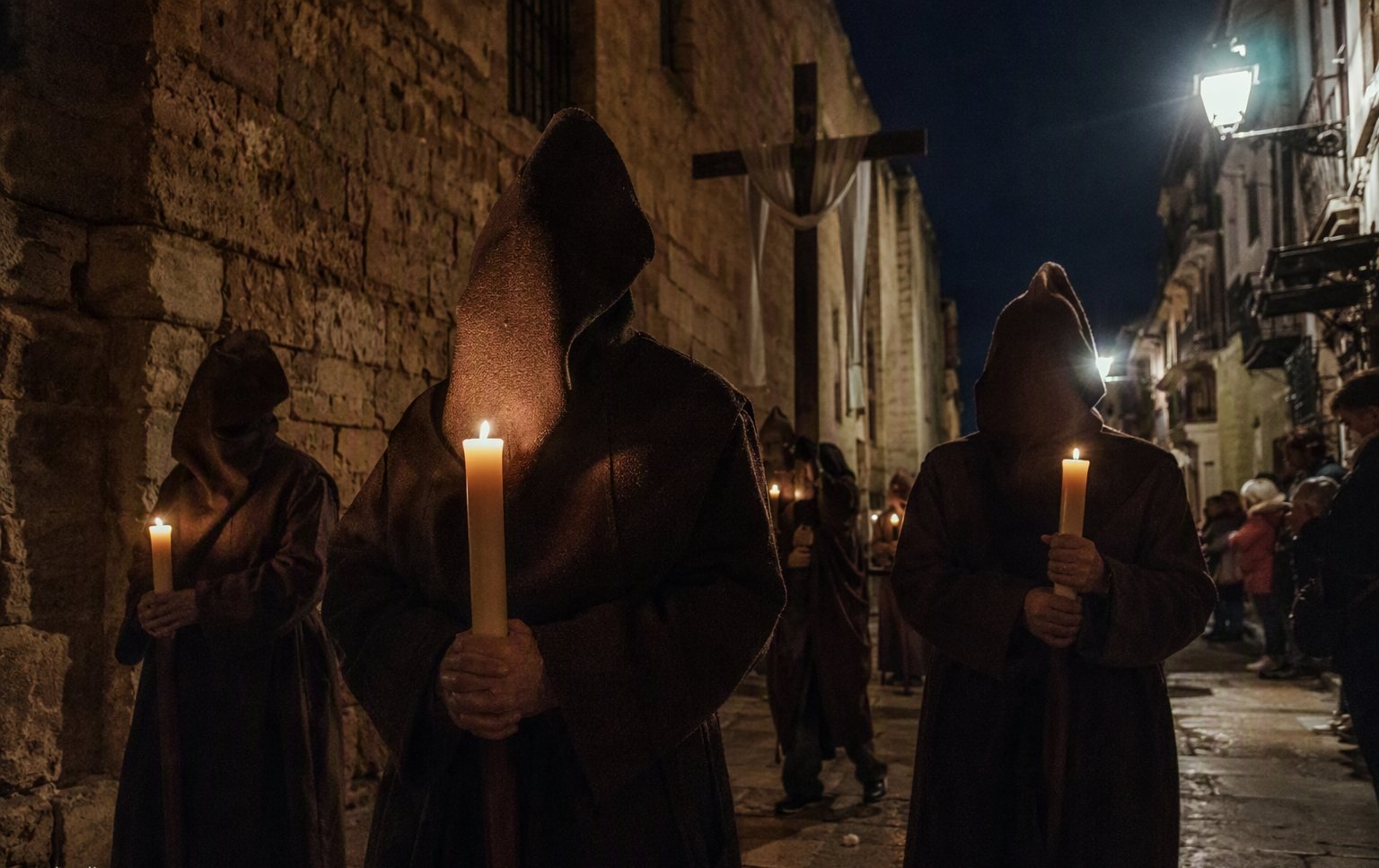
Many solo travellers of a certain age come for one thing: Semana Santa. Zamora's Holy Week has been declared of International Tourist Interest since 1986, it was the first in Spain named a Site of Cultural Interest, and over 250,000 people come for the candlelit silence, the centuries-old brotherhoods and the 5 a.m. drum call that has woken the city for centuries. Experienced alone, in a silent crowd, it can be one of the most moving weeks of your travelling life — Lonely Planet calls it the best outside Andalucía. Book months ahead and plan around the late nights: the Holy Week guide → tells you which processions happen at humane hours.
The honest bit: very little English
You deserve to know this plainly: Zamora is not an English-speaking destination. Only 6.7% of its online reviews are in English, and you'll rarely hear your language on the street. For most of our readers that's the appeal — but it means five phrases will genuinely carry your whole trip: greetings, ordering, asking prices, the bill, and the station. Learn them before you fly; they're all on the Plan Your Trip page →. Spanish warmth does the rest — a smile and a gracias open every door here.
Health and the practical safety net
If you're travelling from the UK, your GHIC (or a still-valid EHIC) gives you access to Spanish state healthcare on the same terms as locals — carry the card, and travel insurance as well, as you would anywhere in Europe. Pharmacies are abundant throughout the city, marked by the green cross, and pharmacists here are used to solving travellers' minor problems with patience and hand gestures if your Spanish stalls. Between the card, the pharmacies and the city's general calm, the practical side of solo travel here is about as low-stress as Europe gets.
Instant community: the pilgrim route
Zamora sits on the Vía de la Plata, the historic pilgrim road north to Santiago — over 9,000 pilgrims a year pass through, and eight out of ten come back as tourists. What that means for you: a ready-made community of interesting, unhurried people, many of them solo and over 60 themselves, eating in the same cafés and walking the same Romanesque streets. Conversation finds you here. If the idea of shared tables and walking stories appeals, read the Vía de la Plata guide →.
The gentle arrival: the high-speed train from Madrid-Chamartín takes from 1 h 03 min (advance fares from ~€14.40), and Zamora's station is about a 15-minute flat walk from the centre — or a short taxi ride from the rank right outside if the bag is heavy. No airport stress, no transfers: the full route, step by step →
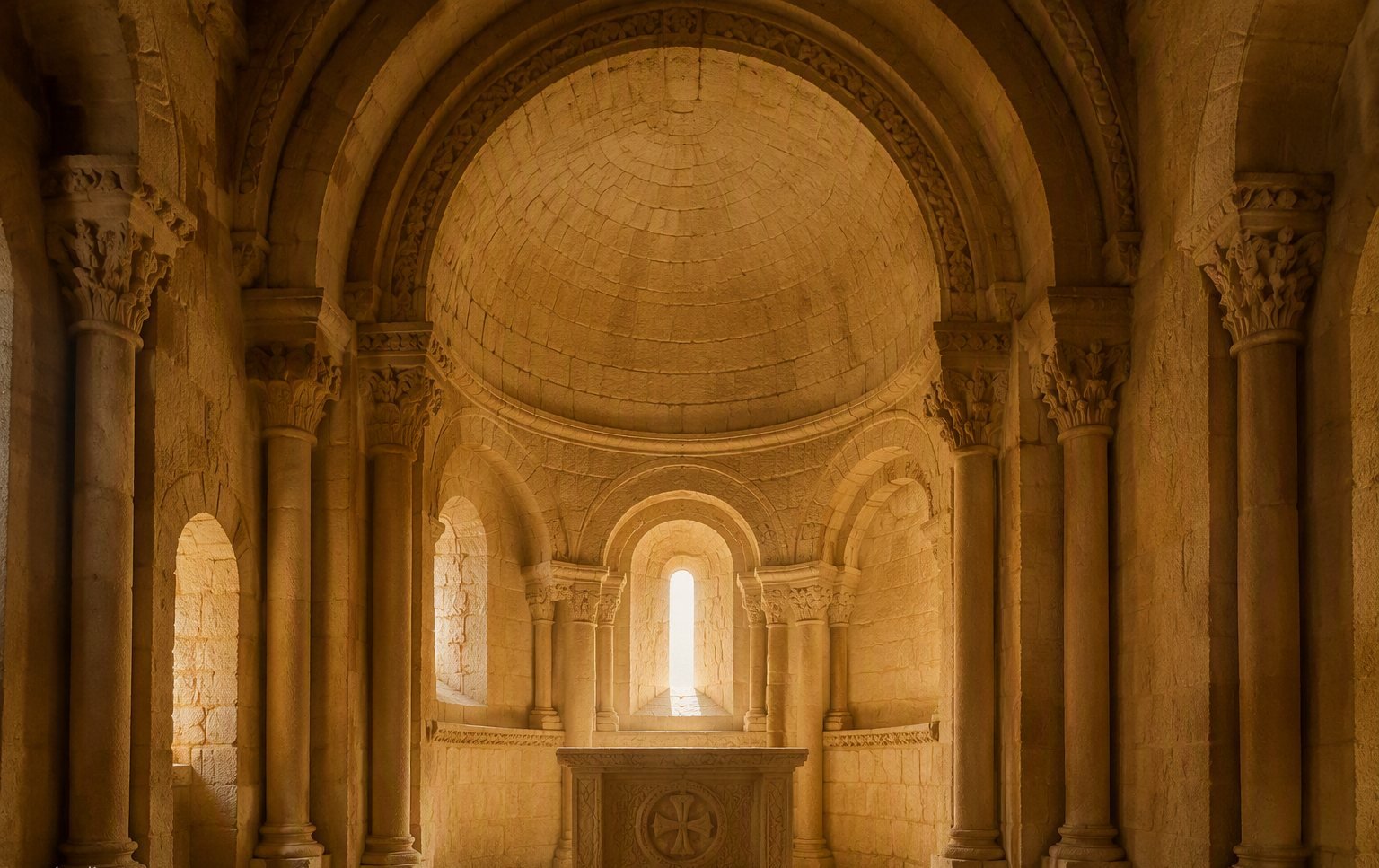
The Romanesque Mile at opening time: twelve temples, a €6 ticket, and nobody behind you.